




 Pipes and fittings



Search Providers in your Location for
Pipes-different type
| Pipe is a Rigid tube (generally made of metal) used for transportation of liquids, gases, or finely divided solids, or as a structural member. Tube is measured by outside diameter, pipe is measured by inside diameter. |  |
|
| Hose and pipes:A hose is a flexible hollow tube designed to carry fluids from one location to another. Hoses are also sometimes called pipes (the word pipe usually refers to a rigid tube, whereas a hose is usually a flexible oneor more generally tubing). The shape of a hose is usually cylindrical (having a circular cross section).Hose design is based on a combination of application and performance. Common factors are Size, Pressure Rating, Weight, Length, Straight hose or Coilhose and Chemical Compatibility. | ||
Types of Plumbing Pipes
| Not sure what type of plumbing pipes are used in your home? This is good information to know, as it can help you to troubleshoot plumbing issues and also make things easier when it comes time to consult a plumber for a more major repair. Plumbing pipes fall into three major categories,plastic Cement ,and metal , but there are many different types in each category. Each type offers benefits and drawbacks, and some types of piping are more common than others. Here’s a look at the different types of plumbing pipes seen in today’s buildings: |
Plastic pipes
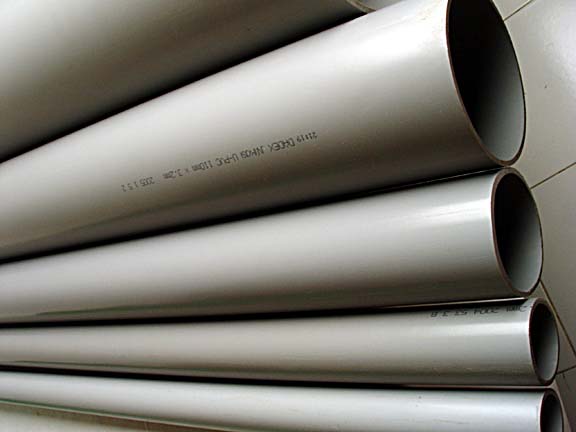
| Polyvinyl Chloride pipe (PVC): White or gray pipe used most often to carry high pressured water. Although it can’t be used with hot water, which can cause the pipe to warp, it’s often used for the main supply line into a home. PVC comes in sizes ranging from 1/2” to 4” in diameter, and it is inexpensive and very easy to work with |
 |
| Polyethylene pipe(PE):It is a thermoplastic material produced from the polymerization of ethylene. PE plastic pipe is manufactured by extrusion in sizes ranging from ½” to 63″. PE is available in rolled coils of various lengths or in straight lengths up to 40 feet. Generally small diameters are coiled and large diameters (>6″ OD) are in straight lengths. PE pipe is available in many varieties of wall thicknesses, based on three distinct dimensioning systems: |
| Grey Plastic Polybutylene pipe(PB): Gray or beige, usually sold in coils, this type of flexible pipe was used extensively from the late 1970s to the mid-1990s as an inexpensive replacement for copper. Over the years, however, PB has proven to be prone to leaks, which is why it’s not used much anymore. |
 |
 |
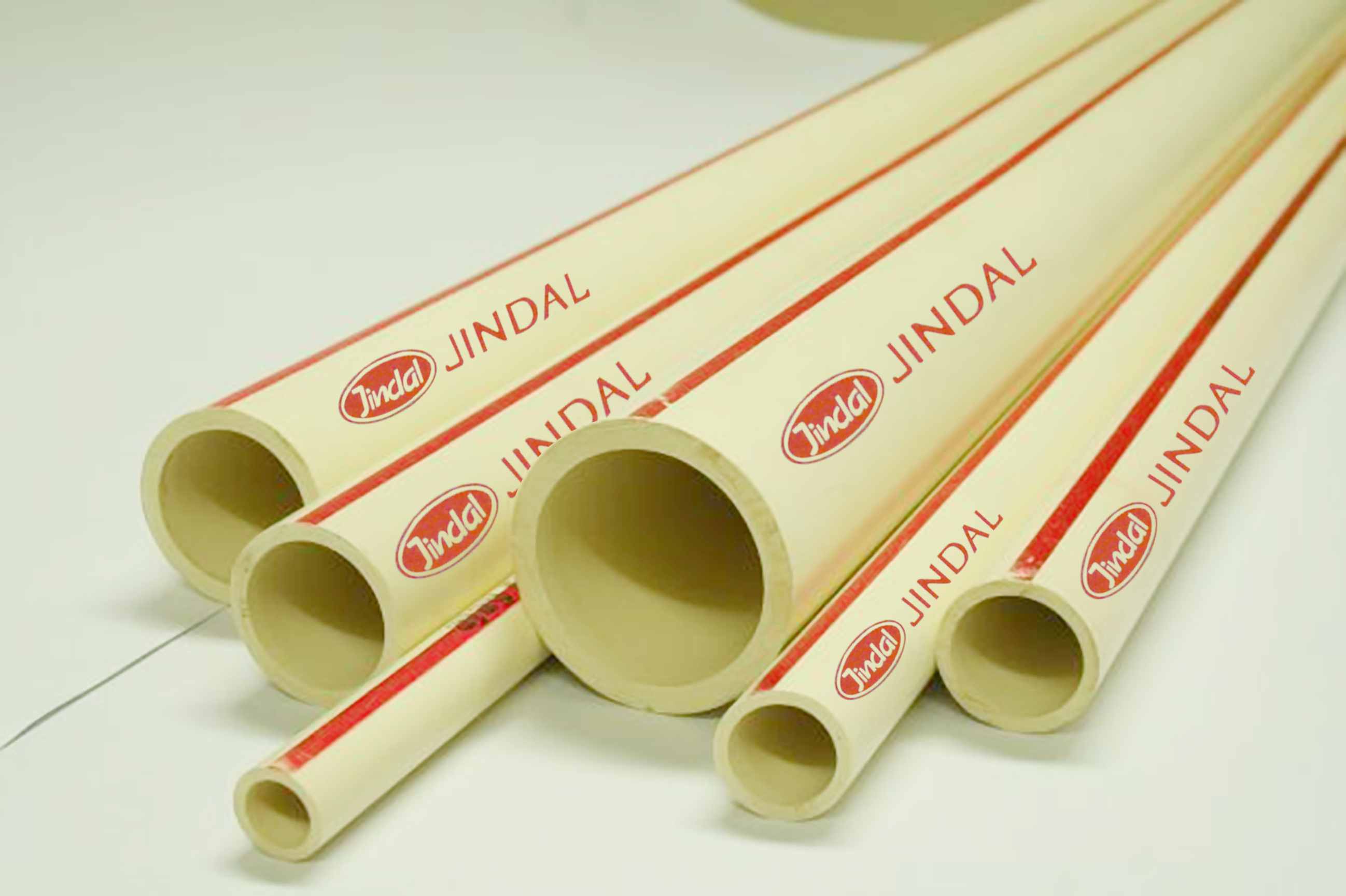
| Creamy Plastic Chlorinated Polyvinyl Chloride pipe (CPVC): Yellowish or beige in color, this is basically PVC pipe that has been given extra chlorination. More reliable than PB and less expensive and easier to install than copper, it can be used for cold and hot water supply. It’s more flexible than PVC but should not be buried, as it will split if it freezes. |
 |
 |
| Cross Linked Polyethylene pipe (PEX): This type of pipe is used extensively for interior plumbing in new homes. PEX resists heat much better than most plastic pipe so it’s often used for water-based heating systems. |
 |
 |
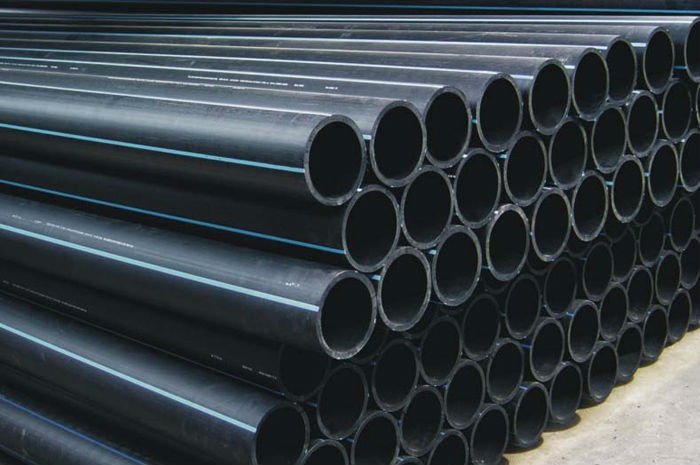
| High density polyethylene pipe (HDPE): This plumbing pipe is highly resistant to corrosion, flexible, and very long lasting, and can be used to carry everything from drinking water to compressed gas to hazardous waste. HDPE comes in long lengths, and joints are formed through heat fusion, eliminating leaks. It has unusually low resistance, or drag, making it a good choice for virtually all plumbing applications. |
 |
| Medium-density polyethylene (MDPE) :It is a type of polyethylene defined by a density range of 0.926–0.940 g/cm3. It is less dense than HDPE, which is more common.MDPE can be produced by chromium/silica catalysts, Ziegler-Natta catalysts or metallocene catalysts. MDPE has good shock and drop resistance properties. It also is less notch sensitive than HDPE. Stress cracking resistance is better than that of HDPE. MDPE is typically used in gas pipes and fittings |
 |
| Acrylonitrite-butadiene-styrene pipe (ABS): This is a black plastic drainage, waste, and vent pipe that was a forerunner to PVC and is currently prohibited by many current plumbing codes. However, this piping is not uncommon in mobile homes and usually needs to be replaced with PVC or HDPE. |
 |
 |
| |
Cement Pipes
| Concrete cement pipes :It is very expensive but non-corrosive by nature. Their advantage is that they are extremely strong and durable. However, being bulky and heavy, they are harder and more costly to handle, install and transport |
 |
 |
| Asbestos Cement Pipe:These pipes are used for drainage of rainwater from roofs, soil and waste and also for ventilation. They come in two profiles – one with beading around socket (WB) and the other without beading around socket (WOB). The latter type is more common than the former.The pipes come in lengths of 3 meters.The principal defects of these pipes are that they are heavy and they break easily. |
 |
| |
Metal pipes
| Copper Pipe: This type of pipe is very reliable but expensive. Copper pipes are highly resistant to corrosion, tolerant of heat, and not prone to leaks, since the connections are soldered and fittings stay tight. Copper pipe comes in three sizes: M (very thin walls), L (medium thickness), and K (thickest walls). Types M and L are usually used for interior hot and cold supply lines, while Type K serves for underground service lines. Copper pipe’s biggest drawback is high price, which is why copper is gradually being replaced by more economical plastic pipe types. |
 |
 |
| Galvanized pipe:It is a zinc coated steel or iron pipe. This galvanized coating keeps the water from eating up the pipe. Because of the amount of work that goes into cutting, threading, and installing galvanized pipe it is not used in homes very often any more. Galvanized pipe is still considered a safe transport for drinking water and is still seen in larger commercial applications for water distribution. |
 |
 |
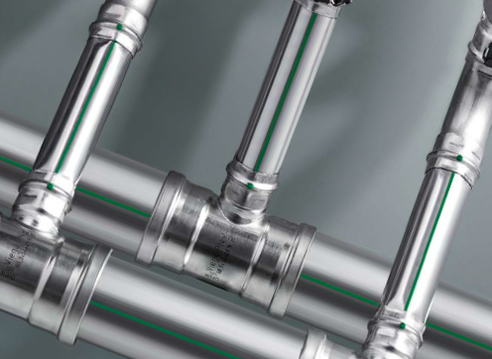
| Stainless Steel pipe: Not seen as often in household use, stainless steel pipes are strong and highly resistant to corrosion but even more expensive than copper pipes. They’re most often used in marine environments where saltwater would erode other metal pipes. |
 |
 |
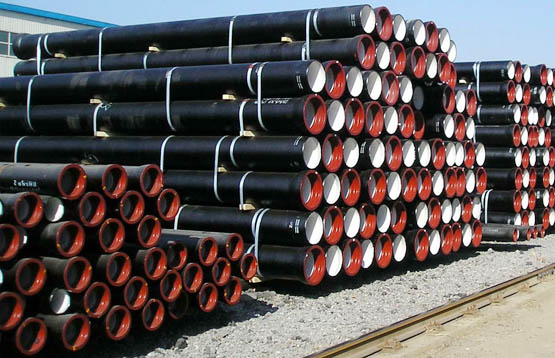
| Cast Iron pipe: This type of pipe was frequently used in the past for drainage. It’s very durable but difficult to work with because of its weight. If you need to replace broken cast iron pipe, PVC is a good choice because it joins well with cast iron. |
 |
| |
